In 2024, the GBD 2021 Stroke Risk Factor Collaborators reported in The Lancet Neurology that stroke disability linked to high body mass index (BMI) rose by 88.2% between 1990 and 2021 (IHME, Global, regional, and national burden of stroke and its risk factors, 1990 to 2021, 2024). That was the steepest climb of any risk factor the study flagged. Extra weight isn’t just a cosmetic worry. It quietly reshapes your blood pressure, blood sugar and heart rhythm.
In this guide, you’ll learn how obesity raises stroke risk, why belly fat matters more than the number on your scale, and what the numbers look like in India. You’ll also see which changes measurably lower your risk, and the warning signs that mean every minute counts. For a wider view of brain health, see neurology and neurosurgery care at HMCH.
Key takeaways
In this article
- Does Obesity Really Increase Your Risk of Stroke?
- How Does Excess Body Fat Damage the Brain’s Blood Vessels?
- Why Belly Fat Matters More Than the Number on Your Scale
- How Big Is the Obesity and Stroke Problem in India?
- Can Losing Weight Lower Your Stroke Risk?
- What Are the Warning Signs of a Stroke?
Does Obesity Really Increase Your Risk of Stroke?
In 2010, a meta-analysis in the journal Stroke pooled 25 prospective studies covering more than 2.2 million people. It found obesity raised the risk of ischemic stroke by 64%, and overweight by 22%, compared with normal weight (Strazzullo et al., Excess Body Weight and Incidence of Stroke, Stroke, 2010). So yes, the link is real. And it grows with body weight.

Ischemic strokes happen when a clot or a narrowed artery blocks blood flow to part of the brain. They’re by far the most common kind. In 2024, the GBD study estimated that ischemic stroke made up 65.3% of all new strokes worldwide (IHME, 2024). That’s exactly the type most closely tied to excess weight.
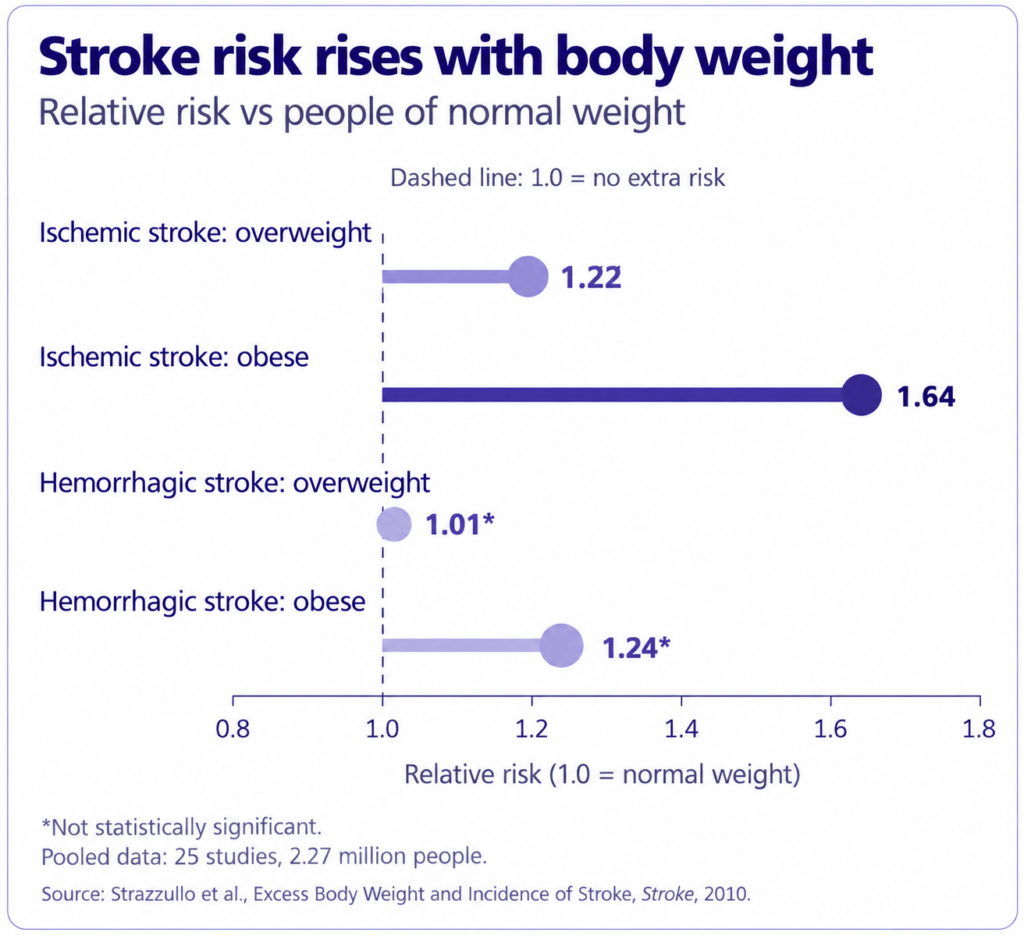
Source: Strazzullo et al., Excess Body Weight and Incidence of Stroke, Stroke, 2010.
What about bleeding strokes? The same analysis found a 24% higher risk of hemorrhagic stroke in people with obesity, but that result wasn’t statistically clear. The strongest, most consistent signal is for clot-driven strokes.
The risk doesn’t switch on at one magic weight. It climbs step by step, from normal weight to overweight to obesity. That’s good news in reverse. Small, steady weight loss can move you back down the ladder.
A 2010 meta-analysis of 25 prospective studies and 2.27 million participants, published in Stroke, found that obesity was linked to a 64% higher risk of ischemic stroke and overweight to a 22% higher risk, compared with normal weight. The authors concluded that stroke risk rises progressively as body weight increases.
To understand the different stroke types in more detail, read types of stroke and their causes.
How Does Excess Body Fat Damage the Brain’s Blood Vessels?
In 2016, the INTERSTROKE study in The Lancet compared 13,447 stroke patients with 13,472 people without stroke across 32 countries. It found high blood pressure alone was linked to 47.9% of stroke risk (O’Donnell et al., INTERSTROKE, The Lancet, 2016). Obesity is one of the most common reasons blood pressure climbs. But it’s only one of several pathways.
High blood pressure
Fat tissue, especially around the abdomen, sends out hormones and signals that stiffen blood vessels. It also prompts the kidneys to hold on to salt and water. Your heart then pumps against higher pressure all day. Over years, this strain batters the small arteries deep inside the brain, leaving them narrow, weak or prone to bursting.
Insulin resistance and diabetes
Excess abdominal fat makes the body’s cells respond poorly to insulin. Blood sugar rises, and high glucose damages the inner lining of arteries. In 2024, the GBD study reported that stroke disability linked to high fasting blood sugar rose by 32.1% since 1990 (IHME, 2024).
Unhealthy cholesterol
Obesity tends to push up triglycerides and “bad” LDL cholesterol while lowering protective HDL. That mix speeds up the buildup of fatty plaque in the neck and brain arteries. A plaque can narrow an artery over time. Or it can crack, trigger a clot, and block blood flow within minutes.
Irregular heartbeat (atrial fibrillation)
In 2015, a meta-analysis of 51 studies in JACC: Clinical Electrophysiology found that every 5-unit rise in BMI raised the risk of atrial fibrillation by 19% to 29% (American College of Cardiology, Obesity Increases Risk of AF, 2015). In atrial fibrillation, blood pools in the heart and can form clots that travel straight to the brain. Learn more about heart rhythm care at HMCH.
Sleep apnea and inflammation
Extra fat around the neck can narrow the airway during sleep. Loud snoring with pauses in breathing is a common sign. Each pause drops oxygen levels and spikes blood pressure through the night. Meanwhile, abdominal fat keeps up a low-grade inflammation that makes blood more likely to clot.
Notice the pattern? Obesity rarely causes a stroke on its own. It loads the dice on almost every other risk factor at the same time.
The INTERSTROKE study of nearly 27,000 people in 32 countries, published in The Lancet in 2016, found that high blood pressure was linked to 47.9% of stroke risk. Because obesity raises blood pressure, blood sugar, cholesterol and the risk of atrial fibrillation together, it acts as a multiplier across several major stroke risk factors.
Why Belly Fat Matters More Than the Number on Your Scale
In 2016, INTERSTROKE found that a high waist-to-hip ratio was linked to 18.6% of stroke risk worldwide, more than current smoking at 12.4% (O’Donnell et al., INTERSTROKE, The Lancet, 2016). Where you carry fat matters. Fat packed around the organs in your abdomen is far more active, and more harmful, than fat on your hips or thighs.
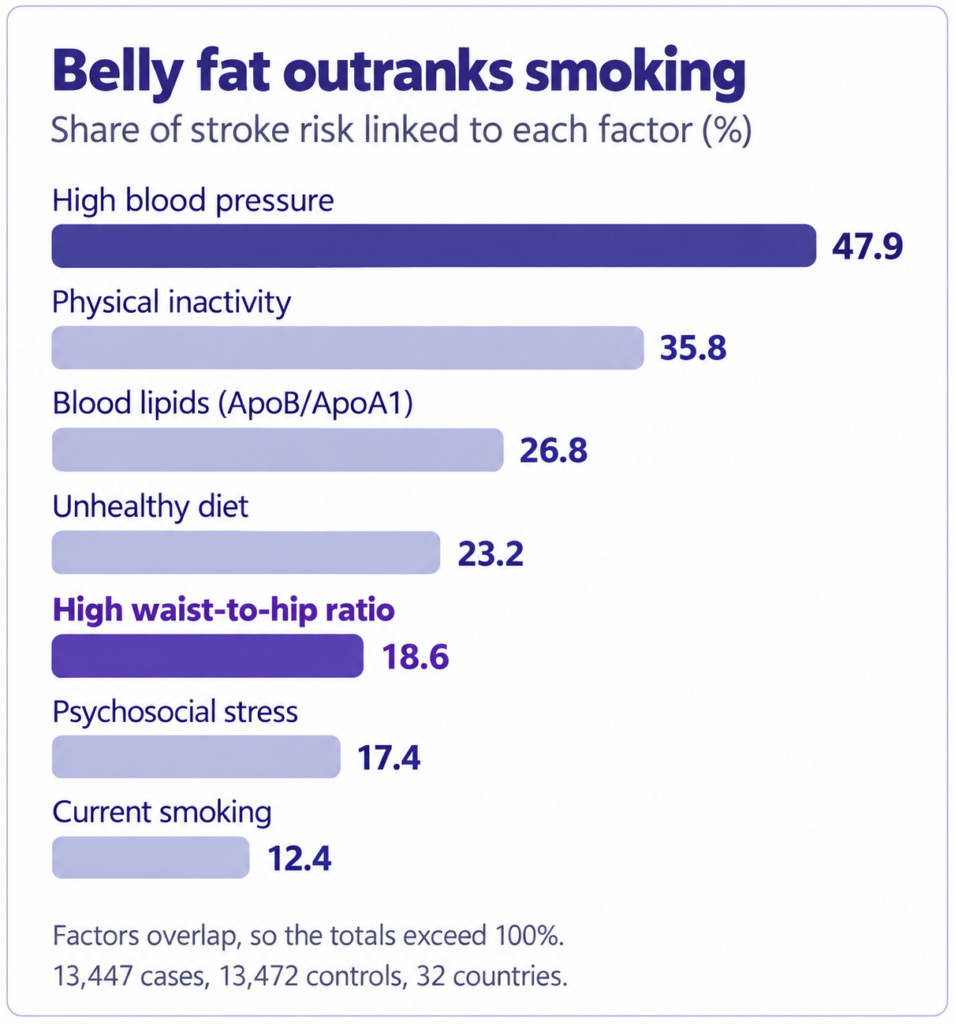
Source: O’Donnell et al., INTERSTROKE, The Lancet, 2016.
Summaries of INTERSTROKE also note that waist-to-hip ratio carried greater weight in people younger than 55 (PACE-CME, summary of INTERSTROKE findings). In other words, belly fat isn’t only an older person’s problem.
This matters even more for Indians. Researchers describe an “Asian Indian phenotype”: more abdominal fat, insulin resistance and unhealthy blood fats, even at a normal BMI (ICMR-INDIAB-23, Indian Journal of Medical Research, 2025). You can look slim and still carry risky fat.
Recognising this, Indian experts revised the definition of obesity in January 2025. The update flags excess body fat from a BMI above 23 kg/m². It also treats a waist above 90 cm in men or 80 cm in women, or a waist-to-height ratio above 0.5, as signs of abdominal obesity (Misra et al., Revised definition of obesity in Asian Indians living in India, 2025).
Try the string test
Cut a piece of string to match your height, then fold it in half. If the folded string won’t reach around your waist at the level of your belly button, your waist-to-height ratio is above 0.5. It takes 30 seconds, needs no scale, and targets the kind of fat most tied to stroke.
When did you last measure your waist instead of just stepping on a scale?
The INTERSTROKE study, published in The Lancet in 2016, linked a high waist-to-hip ratio to 18.6% of stroke risk across 32 countries, a larger share than current smoking at 12.4%. India’s 2025 revised obesity definition sets abdominal obesity thresholds at a waist above 90 cm for men and 80 cm for women.
Not sure where you stand? A preventive health check-up at HMCH measures your waist, blood pressure, sugar and cholesterol in one visit.
How Big Is the Obesity and Stroke Problem in India?
In 2023, the ICMR-INDIAB national study reported that 28.6% of Indian adults had generalized obesity and 39.5% had abdominal obesity, about 254 million and 351 million people (Anjana et al., ICMR-INDIAB-17, The Lancet Diabetes & Endocrinology, 2023). The same survey found high blood pressure in 35.5% of adults, roughly 315 million people.
Stroke numbers are moving in the same direction. In February 2025, the Ministry of Health and Family Welfare told the Rajya Sabha that India’s crude stroke incidence rose by 30.1% between 1990 and 2019, citing the GBD study (Ministry of Health and Family Welfare, Rajya Sabha reply, 2025). The reply also listed a population-based stroke registry in Cuttack, right here in Odisha.
Population studies across India have recorded 108 to 172 new strokes per 100,000 people each year. Between 18% and 42% of patients died within a month of their stroke (Stroke in India: a systematic review of incidence, prevalence and case fatality, PubMed Central, 2021). Those are sobering odds for a largely preventable disease.
Globally, excess weight is the fastest-growing driver. An earlier GBD analysis named high BMI the second leading stroke risk factor in 2019, behind only high blood pressure, and the fastest-growing one since 1990 (GBD 2019 Stroke Collaborators, The Lancet Neurology, 2021).
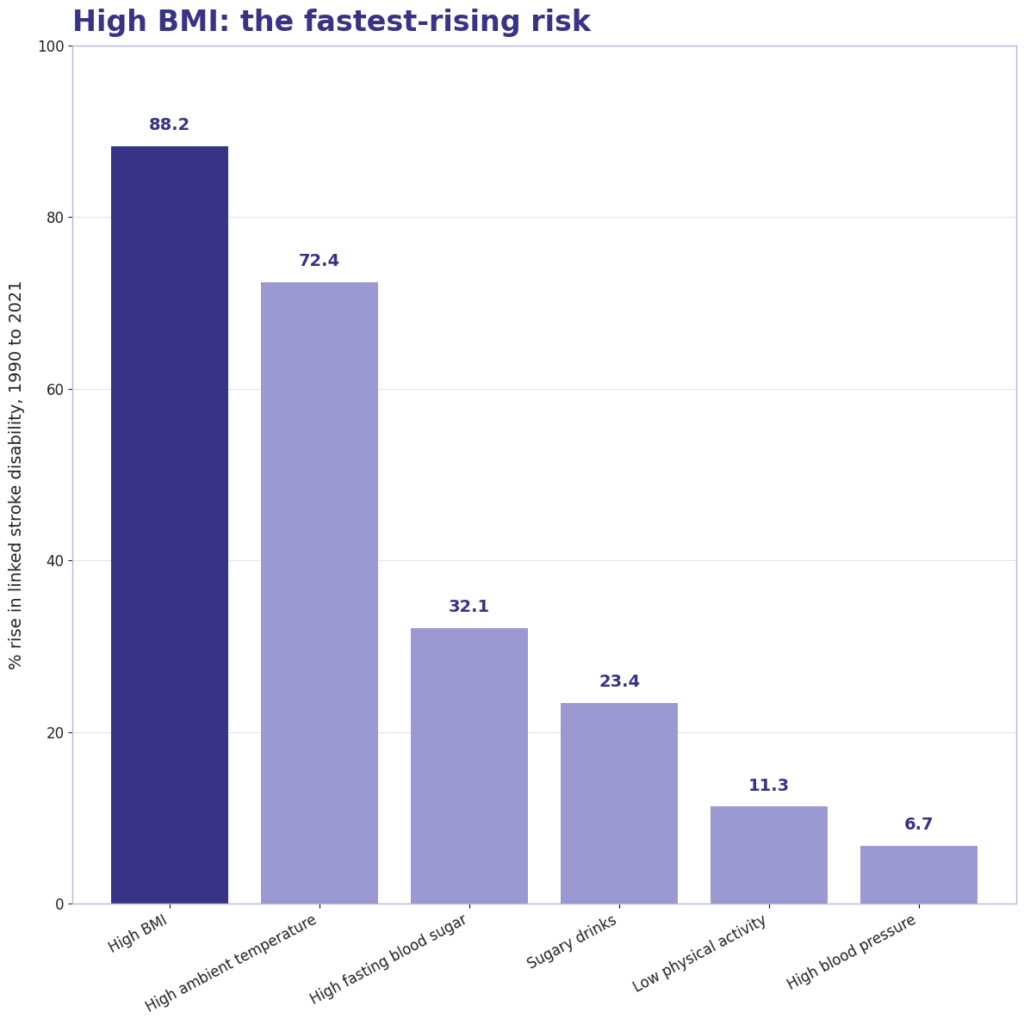
Source: GBD 2021 Stroke Risk Factor Collaborators, The Lancet Neurology, 2024 (via IHME).
Why does this matter for families in Bhubaneswar? Because obesity, high blood pressure and diabetes rarely arrive alone. They tend to cluster in the same person, and they often build up silently for years before the first warning sign.
According to the ICMR-INDIAB study published in The Lancet Diabetes & Endocrinology in 2023, about 351 million Indian adults have abdominal obesity and 315 million have high blood pressure. The Ministry of Health reported in 2025 that India’s crude stroke incidence rose by 30.1% between 1990 and 2019.
Can Losing Weight Lower Your Stroke Risk?
In 2003, a meta-analysis of 25 randomised trials in Hypertension found that losing about 5.1 kg lowered systolic blood pressure by 4.44 mmHg, roughly 1 mmHg for every kilogram lost (Neter et al., Influence of Weight Reduction on Blood Pressure, Hypertension, 2003). Since high blood pressure drives nearly half of stroke risk, even modest weight loss pays off.
For people with severe obesity, the effect can be larger. In 2026, a meta-analysis in The Egyptian Journal of Neurology, Psychiatry and Neurosurgery pooled 16 studies of 975,351 patients. It linked bariatric surgery with a 29% lower risk of stroke compared with non-surgical care (Springer Nature, Risk of stroke after bariatric surgery, 2026). Surgery isn’t for everyone, though. It’s a decision to make carefully with a specialist.
Think of it as a dial, not a switch
You don’t need to reach an “ideal” weight to benefit. If you weigh 85 kg, losing 5 kg is about 6% of your body weight. Based on the trial data, that alone could take around 4 to 5 mmHg off your systolic blood pressure.

So where do you start? These steps are simple, and each one works on more than one risk factor at once.
Start with your plate
Cut back on refined rice portions, fried snacks, sweets and sugary drinks. In 2024, the GBD study found stroke disability linked to diets high in sugar-sweetened beverages rose by 23.4% since 1990. Fill half your plate with vegetables and add dal, eggs, fish or paneer for protein. Our Dietetics & Nutrition OPD can build a plan around the foods you already eat.
Move a little, every day
INTERSTROKE linked a lack of regular physical activity to 35.8% of stroke risk. Brisk walking, cycling or yoga all count. Start with 10 minutes after meals, then build up. If joint pain holds you back, a physiotherapist at HMCH can suggest safe options.
Take snoring seriously
Loud snoring, gasping at night or heavy daytime sleepiness can point to sleep apnea. It’s treatable, and treating it can help with blood pressure control. Mention it to your doctor.
Know your numbers
Check your blood pressure, fasting blood sugar, cholesterol and waist size at least once a year. If you’re over 40 or have a family history of stroke, ask your doctor how often to recheck.
Ask about medical options
For some people, lifestyle changes aren’t enough. Newer weight-loss medicines and bariatric surgery may help selected patients. Both need proper medical assessment and follow-up. Never start weight-loss drugs without a doctor’s advice.
A 2003 meta-analysis of 25 randomised trials, published in Hypertension, found that an average weight loss of 5.1 kg reduced systolic blood pressure by 4.44 mmHg. A 2026 meta-analysis of 975,351 patients linked bariatric surgery to a 29% lower stroke risk in people with severe obesity.
What Are the Warning Signs of a Stroke?
In 2006, neurologist Jeffrey Saver calculated in the journal Stroke that a typical untreated ischemic stroke destroys about 1.9 million brain cells every minute (Saver, Time Is Brain: Quantified, Stroke, 2006). That’s why recognising a stroke quickly matters as much as preventing one. Use the BE FAST check:
- B :- BalanceSudden loss of balance, dizziness or trouble walking.
- E :- EyesSudden blurred, double or lost vision in one or both eyes.
- F: – FaceOne side of the face droops when the person smiles.
- A:- ArmsOne arm drifts down when both are raised.
- S:- SpeechSlurred, strange or hard-to-understand speech.
- T:- TimeCall 108 immediately and note when symptoms started.
Don’t wait to see if the symptoms pass. A “mini-stroke” (TIA) that clears within minutes is still a serious warning that a bigger stroke may follow. Don’t give food, water or medicines, and go straight to a hospital equipped for emergency stroke care, such as emergency and critical care at HMCH.
Why note the time? Because doctors decide on clot-busting and clot-removal treatments based on how long ago symptoms began.
According to a 2006 analysis in Stroke by neurologist Jeffrey Saver, a typical untreated ischemic stroke destroys about 1.9 million neurons every minute. Recognising stroke signs using BE FAST (balance, eyes, face, arms, speech, time) and calling an ambulance immediately gives patients the best chance of recovery.
Get Your Stroke Risk Checked at HMCH
Obesity-related stroke risk builds silently, but the checks that reveal it are quick. At Hi-Tech Medical College & Hospital, Bhubaneswar, our neurology, cardiology and dietetics teams can assess your blood pressure, blood sugar, cholesterol and waist measurements, then help you build a plan you can actually stick to.
Call 0674-3500-900 Book an appointment
Frequently Asked Questions
Can a thin person have a stroke because of belly fat?
Yes. Many Indians carry harmful abdominal fat at a normal weight. The 2023 ICMR-INDIAB study found 39.5% of Indian adults had abdominal obesity, compared with 28.6% who had generalized obesity. Waist size can reveal risk that BMI misses, so measure both. See our preventive health check-up.
What BMI counts as obese for Indians?
India’s January 2025 revised definition flags excess body fat from a BMI above 23 kg/m², lower than the global cut-off of 30. It also uses waist size: above 90 cm for men and 80 cm for women, or a waist-to-height ratio above 0.5, signals abdominal obesity.
How much weight do I need to lose to lower my stroke risk?
Less than you might think. A 2003 meta-analysis of 25 randomised trials found that losing about 5 kg lowered systolic blood pressure by roughly 4.4 mmHg, about 1 mmHg per kilogram. Because high blood pressure drives nearly half of stroke risk, every kilogram counts. Our dietitians can help.
Does obesity cause hemorrhagic (bleeding) strokes too?
The link is weaker than for clot-related strokes. A 2010 meta-analysis found a 24% higher hemorrhagic stroke risk with obesity, but it wasn’t statistically clear. However, the first INTERSTROKE study, published in 2010, did find waist-to-hip ratio was a significant risk factor for intracerebral hemorrhage.
Is stroke becoming more common in India?
Yes. In February 2025, the Ministry of Health told the Rajya Sabha that India’s crude stroke incidence rose by 30.1% between 1990 and 2019, citing the Global Burden of Disease study. Rising obesity, high blood pressure and diabetes are major contributors. Learn about stroke treatment at HMCH.
Conclusion
Obesity doesn’t cause stroke through one single route. It raises blood pressure, disturbs blood sugar and cholesterol, and makes dangerous heart rhythms more likely, all at once. The encouraging part? Every kilogram and every centimetre off your waist moves the odds back in your favour.
- Obesity raises ischemic stroke risk by about 64% (Strazzullo et al., Stroke, 2010).
- Belly fat matters more than weight, especially for Indians.
- About 5 kg of weight loss can lower systolic blood pressure by around 4 mmHg.
- BE FAST: at the first sign of stroke, call
Start with one change this week, and get your numbers checked. For the next step in protecting your heart and brain, read how high blood pressure damages the brain.
About Hi-Tech Medical College & Hospital
HMCH is Odisha’s first private medical college and a NABH-accredited multispeciality teaching hospital in Bhubaneswar, with a 935-bed tertiary care hospital, 20+ specialities and 24×7 emergency care. Articles on this blog are written for patients and families and reviewed by our doctors.
This article is for general awareness and does not replace medical advice. If you think someone is having a stroke, call 06743500900 immediately.