
World Heart Day 2026 arrives with a sobering reminder: every year, cardiovascular disease claims more than 20 million lives worldwide. Yet the World Heart Federation (WHF) estimates that 80% of these deaths trace back to risk factors people can prevent or manage. That gap between what’s preventable and what actually happens is exactly what this year’s campaign is trying to close.
On Tuesday, 29 September 2026, the world marks World Heart Day under the theme Don’t Miss a Beat. In this guide, you’ll learn what the theme means, how the day began, who is most at risk, the early warning signs of heart problems Indians most often ignore, the screening tests worth knowing, and everyday habits that protect your heart. For an overview of our heart services, visit the Department of Cardiology at Hi-Tech Medical College & Hospital.
When Is World Heart Day 2026, and What Is the Theme?
Table of Contents
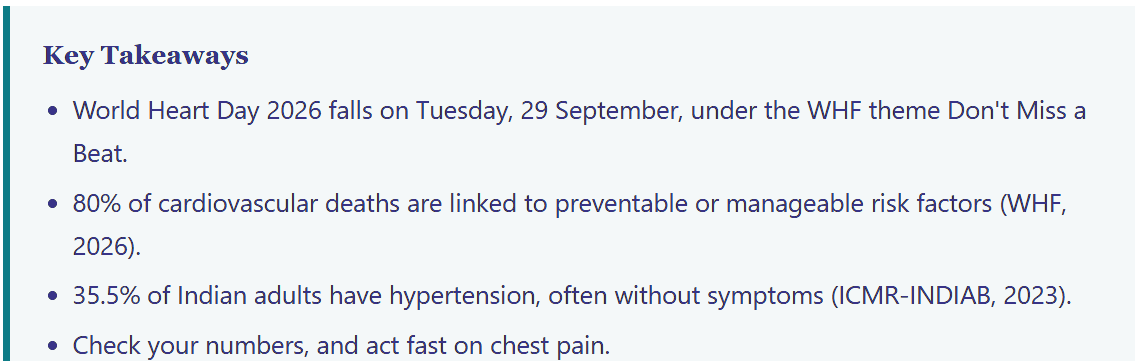
ToggleIn July 2026, the World Heart Federation confirmed that World Heart Day 2026 falls on Tuesday, 29 September, with the theme Don’t Miss a Beat (World Heart Federation, 2026 campaign launch release). Now in its second year, the campaign asks people to spot hidden symptoms, protect their hearts, and push for better care.
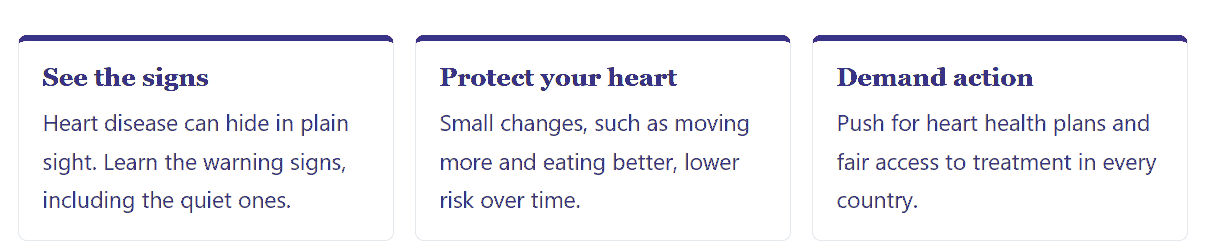
Symptoms of heart disease are still being missed, dismissed, or ignored. So the 2026 campaign is built on three clear messages.
To support the first message, WHF has launched an “Are You Heart Smart?” quiz covering myths, hidden symptoms, and overlooked risk factors. Its Keep the Beat challenge is also back, inviting people to pledge more activity through September. Both are available on the World Heart Day website and app. Why run the same theme twice? Because one year of awareness hasn’t closed the gap.
Seen a different theme online? Several websites still list older WHF campaign lines, such as “Use Heart for Action”, as the 2026 theme. The WHF’s own July 2026 launch release confirms Don’t Miss a Beat. If your school, office, or housing society is planning an event, use the official theme and the hashtag #DontMissABeat.
The World Heart Day 2026 theme is Don’t Miss a Beat, observed on 29 September and now in its second year. The campaign rests on three messages: see the signs, protect your heart, and demand action, because cardiovascular disease still claims over 20 million lives worldwide every year.
World Heart Day History: How Did It Begin?
World Heart Day history begins in 2000, when the World Heart Federation first observed the day, and 2025 marked its 25th anniversary (World Heart Federation, World Heart Day). WHF is an umbrella body uniting over 200 scientific, medical, patient, and civil society organisations, and it uses the day to rally that network around one heart health message each year.
In 2025, WHF introduced Don’t Miss a Beat, and the campaign reached audiences in 140 countries in its first year. The 2026 edition keeps the theme and adds new tools: the Are You Heart Smart? quiz, the returning Keep the Beat challenge, and a Heart Health Champions programme that recognises people spreading heart health messages on social media.
Over 25 years, the day has grown from a date on the calendar into a global platform. Hospitals, schools, workplaces, and community groups now use 29 September for screenings, walks, and talks. WHF’s chief executive has described it as the biggest public platform for heart health anywhere.
What Is the Significance of World Heart Day?
World Heart Day matters because cardiovascular disease is still the world’s leading cause of death. In its July 2025 fact sheet, WHO estimated 19.8 million CVD deaths in 2022, about 32% of all deaths worldwide, with over three quarters in low- and middle-income countries such as India (WHO, Cardiovascular diseases fact sheet, 2025).
The day shifts the focus from treating heart disease to preventing it. WHO also reports that at least 38% of the 18 million premature noncommunicable disease deaths in 2021, those before age 70, were caused by cardiovascular disease. If so many of these deaths are preventable, why do they keep happening? Largely because the risks stay invisible until it’s too late.
It matters at the policy level too. WHF describes cardiovascular disease as the world’s most urgent health crisis, yet one that leaders often overlook. That’s why the campaign’s third message asks people to demand national heart health plans and fair access to treatment.
The significance of World Heart Day lies in the scale of the problem: cardiovascular disease caused an estimated 19.8 million deaths in 2022, about 32% of global deaths, according to WHO. The day turns attention from treatment to prevention, encouraging early detection of silent risks such as high blood pressure, diabetes, and high cholesterol.
Why Should Indians Pay Closer Attention to Heart Health?
In 2015, cardiovascular disease caused more than 2.1 million deaths in India, over a quarter of all deaths, according to the Million Death Study published in The Lancet Global Health (Ke et al., Divergent trends in ischaemic heart disease and stroke mortality in India, 2018). Heart disease is no longer limited to old age or big cities.
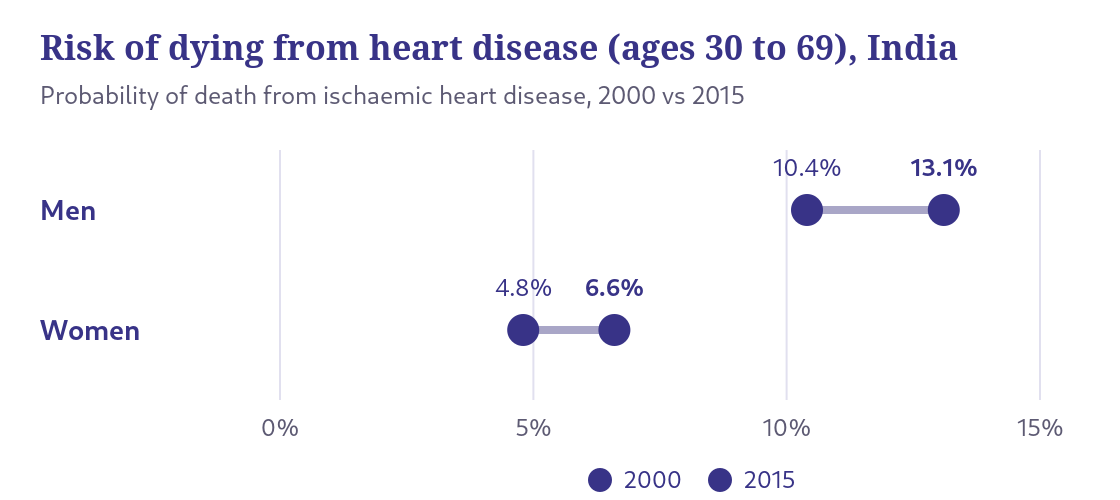
Source: Million Death Study, The Lancet Global Health, 2018 (PMC6942542).
Among adults aged 30 to 69, the probability of dying from ischaemic heart disease rose between 2000 and 2015, from 10.4% to 13.1% in men and from 4.8% to 6.6% in women. The same study found something many people don’t expect: heart disease death rates in rural India climbed quickly enough to overtake urban rates.
Heart disease arrives earlier in Indians
ICMR researchers reported that heart disease rises in Asian Indians 5 to 10 years earlier than in other populations, with a mean age of 53 at first heart attack (Sharma and Ganguly, Premature coronary artery disease in Indians and its associated risk factors, Vascular Health and Risk Management, 2005). That’s often the peak of someone’s working, parenting, and caregiving years. So waiting until retirement to get a heart check simply doesn’t fit the Indian risk pattern.
Women are at risk too
Is chest discomfort in women taken as seriously as it should be? Often, it isn’t. An epidemiological review citing Global Burden of Disease data notes that heart disease is the leading cause of death among women in India, accounting for almost 18% of female deaths (The Rising Burden of Cardiovascular Disease and Thrombosis in India: An Epidemiological Review, PubMed Central).
India carries a heavy and early heart disease burden. The Million Death Study found that cardiovascular disease caused over 2.1 million Indian deaths in 2015, and ICMR researchers report that it appears 5 to 10 years earlier in Indians than in other populations. Screening in the 30s and 40s is a practical priority.
Who Is at High Risk of Developing Heart Disease?
Anyone can develop heart disease, but risk climbs with every added factor. In 2023, the ICMR-INDIAB study of over 113,000 Indian adults found that 35.5% had hypertension, 11.4% had diabetes, and 81.2% had dyslipidaemia, meaning abnormal cholesterol or blood fats (ICMR-INDIAB-17, The Lancet Diabetes & Endocrinology, 2023). Most people with these conditions feel fine.
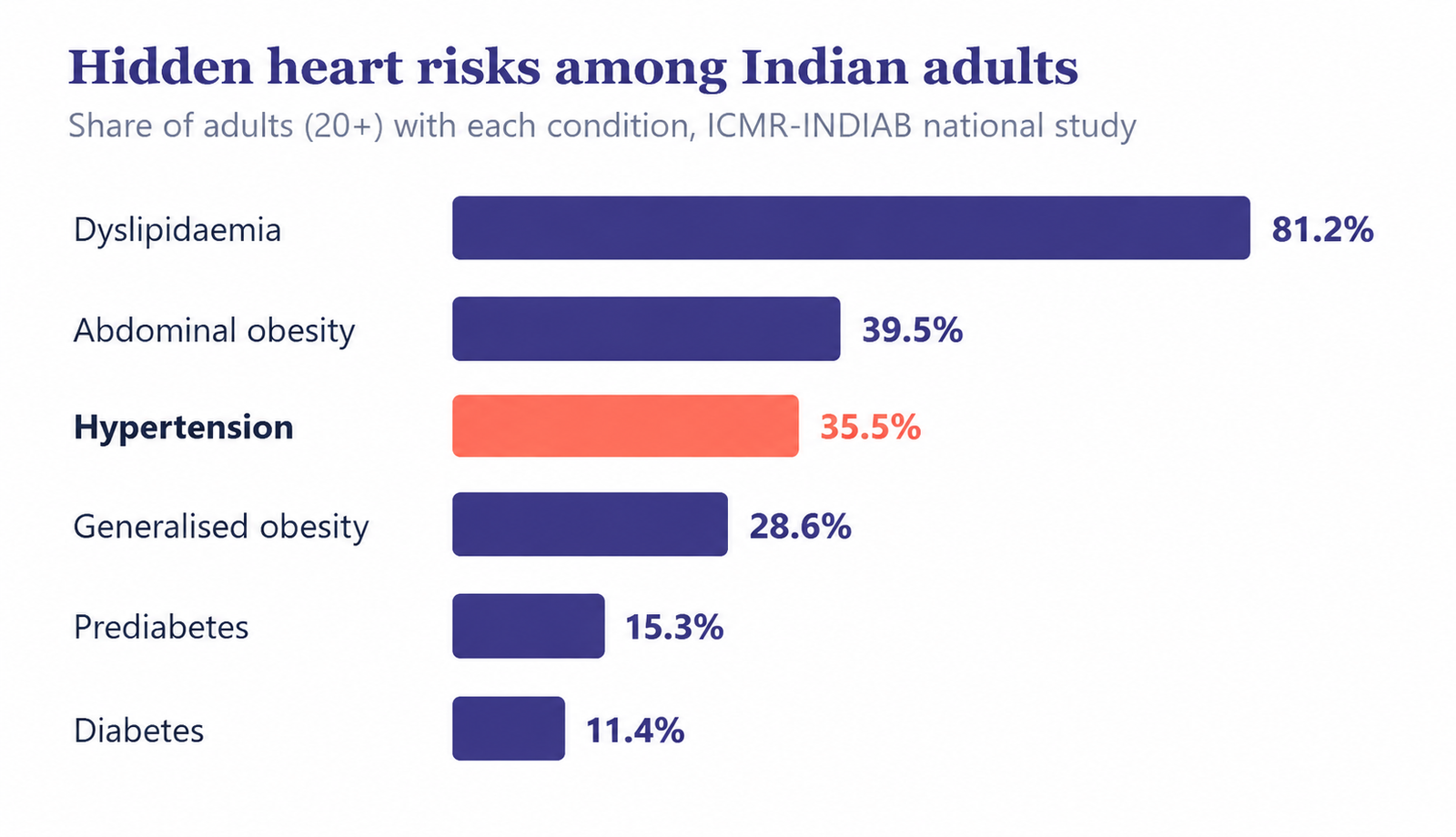
Source: ICMR-INDIAB-17, The Lancet Diabetes & Endocrinology, 2023.
These are the most common heart disease risk factors. The more you tick, the more important a check-up becomes:
- Age: Risk rises with age, but in Indians heart disease often starts earlier than expected.
- High blood pressure: It strains the heart and arteries, and it rarely causes symptoms.
- Abnormal cholesterol: Asian Indians often have low HDL and high triglycerides (Cardiovascular disease in India: A 360 degree overview, 2020).
- Diabetes and prediabetes: High blood sugar damages blood vessels over time. 15.3% of Indian adults have prediabetes.
- Tobacco in any form: Smoking and smokeless forms such as gutkha, khaini, and gudakhu.
- Overweight and belly fat: 28.6% of Indian adults have generalised obesity and 39.5% have abdominal obesity.
- Physical inactivity: A sedentary routine raises weight, blood pressure, and sugar.
- Unhealthy diet: WHO lists excess salt, sugar, and fats among key dietary risks.
- Harmful alcohol use: Heavy drinking raises blood pressure and harms the heart muscle.
- Air pollution: WHO names it an important environmental risk factor for heart disease and stroke.
- Chronic stress: Long-term stress can feed unhealthy habits and higher blood pressure.
- Family history: A parent or sibling with heart disease at a young age raises your risk.
Do two or more of these apply to you? Then a heart check-up this month is a sensible step, even if you feel perfectly well. For related care, see our Endocrinology and General Medicine departments.
The ICMR-INDIAB national study found that 35.5% of Indian adults have hypertension and 11.4% have diabetes, two of the strongest drivers of heart attack and stroke. Because both are often symptom-free, knowing your risk factors is the first practical step in the World Heart Day 2026 message of Don’t Miss a Beat.
What Are the Early Warning Signs of Heart Problems?
In its July 2025 fact sheet, WHO lists pain or discomfort in the centre of the chest, spreading to the arms, left shoulder, elbows, jaw, or back, as the main heart attack symptom. But WHO also warns that the underlying disease often causes no symptoms at all. Sometimes, the heart attack itself is the first sign.
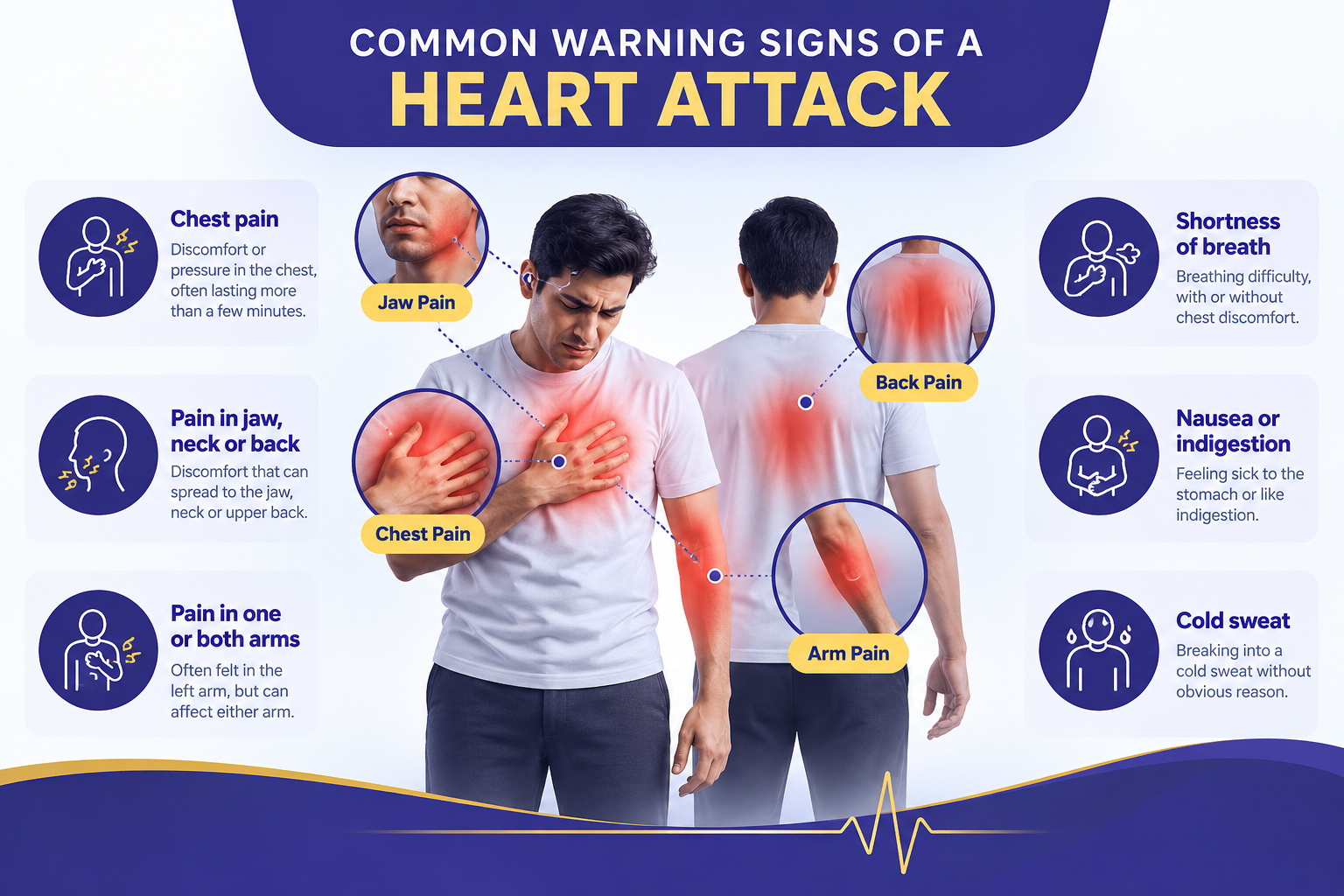
Heart attack warning signs
Watch for these signs, especially if two or more appear together:
- Pressure, pain, or discomfort in the centre of the chest
- Pain spreading to the arms, left shoulder, elbows, jaw, or back
- Shortness of breath or difficulty breathing
- Nausea or vomiting
- Light-headedness or fainting
- A cold sweat and turning pale
WHO also notes that women are more likely than men to have shortness of breath, nausea, vomiting, and back or jaw pain. These symptoms are easier to brush aside than classic chest pain, so they deserve the same urgency.
“It’s just gas.” It’s common to blame chest discomfort on acidity after a heavy meal. WHO notes that angina can be mistaken for indigestion or heartburn (WHO Regional Office for Africa, Cardiovascular diseases). If the discomfort comes with sweating or breathlessness, or spreads to your arm or jaw, don’t wait to see whether an antacid works.
If you suspect a heart attack, act now
- Call 06743500900 for an ambulance, or for emergency help.
- Don’t drive yourself to hospital.
- Keep the person seated, calm, and with loose clothing.
- Head to the nearest hospital with emergency cardiac care.
- Note the time symptoms started and tell the emergency team.
Other heart warning signs that need a check-up
Not every heart problem starts with a heart attack. Book a doctor’s visit soon if you notice unusual tiredness during routine tasks, breathlessness when climbing stairs or lying flat, a racing or irregular heartbeat, especially with dizziness, swelling in the ankles, feet, or legs, or fainting spells. These can point to conditions such as heart failure, rhythm problems, or valve disease.
Some threats give no warning at all
High blood pressure is the clearest example. WHO states that people with high blood pressure may not feel symptoms, and the only way to know is to get checked (WHO, Hypertension fact sheet, 2025). In its 2023 global report, WHO estimated that 188.3 million Indian adults aged 30 to 79 were living with hypertension. A review of Indian outreach programmes puts control at only about 12% of those affected (Empowering Communities: A Review of Community-Based Outreach Programs in Controlling Hypertension in India, PubMed Central).
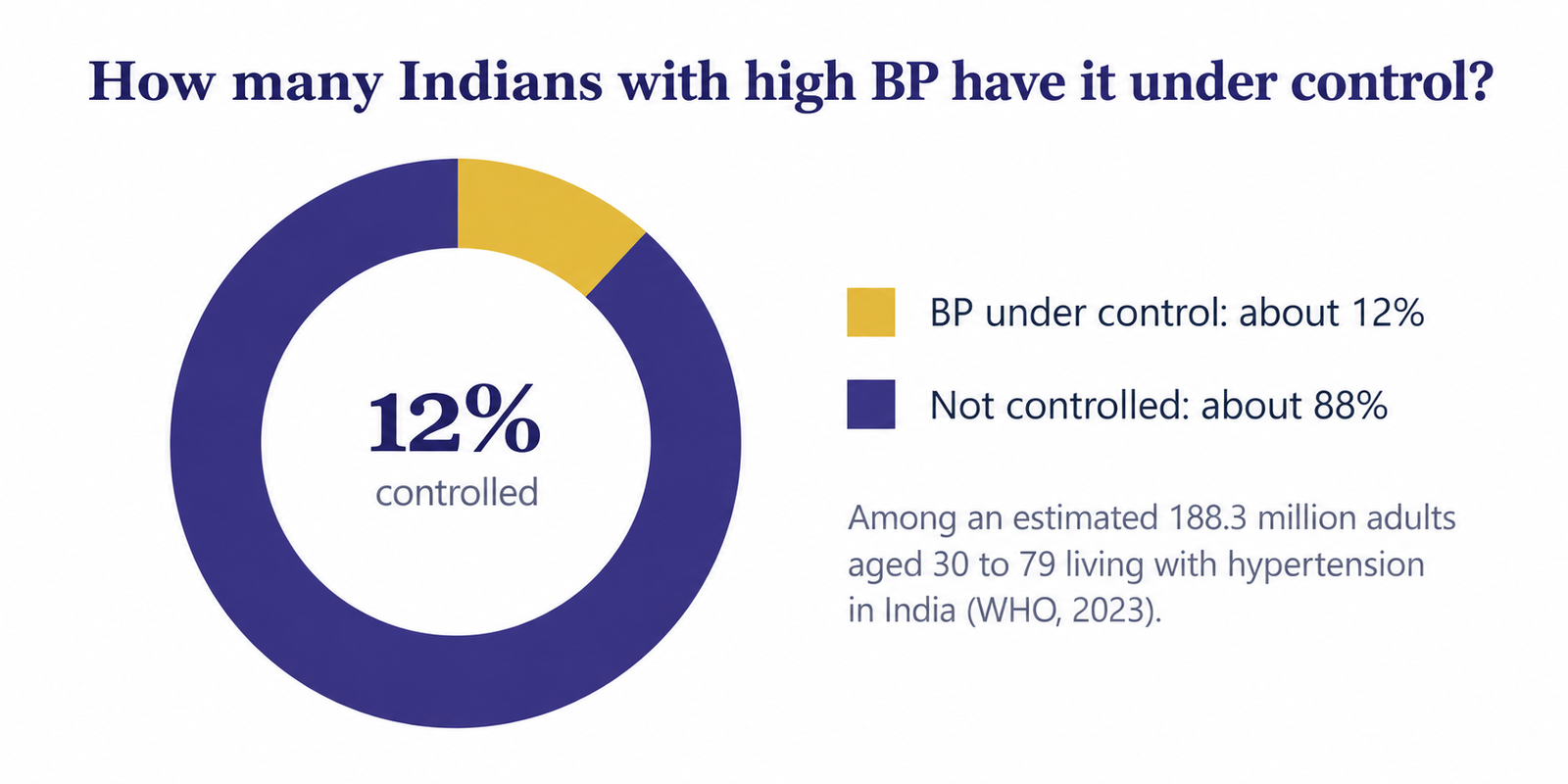
Heart disease often hides in plain sight. WHO notes that the underlying disease frequently causes no symptoms, and a heart attack or stroke may be the first sign. In India, only about 12% of adults with hypertension have it controlled, which is why a simple blood pressure check matters more than waiting for symptoms.
Which Heart Health Screening Tests Should You Consider?
WHO’s 2025 fact sheet stresses detecting cardiovascular disease as early as possible, so counselling and medicines can begin. With 35.5% of Indian adults living with hypertension (ICMR-INDIAB, 2023), most screening starts with three simple checks: blood pressure, blood sugar, and a lipid profile. Your doctor may add heart-specific tests based on your age, symptoms, and risk.
Blood pressure check
WHO defines hypertension as a reading of 140/90 mmHg or higher. Because it rarely causes symptoms, a regular reading is the only way to catch it. If you’re already on treatment, a validated home BP monitor can help you track readings between visits.
Blood sugar tests (fasting glucose and HbA1c)
Fasting blood sugar shows your level at one point in time, while HbA1c reflects your average over roughly three months. With 15.3% of Indian adults in the prediabetes range, catching high sugar early gives you time to change course before diabetes sets in.
Lipid profile
A lipid profile measures LDL (bad) cholesterol, HDL (good) cholesterol, triglycerides, and total cholesterol. It shows how likely fatty plaque is to build up in your arteries. It’s especially useful for Indians, since low HDL and high triglycerides are common here.
BMI and waist measurement
For Indians, waist size matters as much as weight. ICMR-INDIAB found that 39.5% of adults have abdominal obesity. A tape measure around the waist, alongside your BMI, gives a quick picture of fat that raises heart and diabetes risk.
Electrocardiogram (ECG)
An ECG records the heart’s electrical activity in a few minutes. It can show rhythm problems, signs of strain, or evidence of an earlier heart attack that went unnoticed. Abnormal results usually lead to further tests.
Echocardiogram (echo)
An echocardiogram (echo) uses ultrasound to create moving images of the heart. It helps doctors check the heart’s structure, how well the valves work, and how strongly the heart pumps.
Stress test (TMT)
A treadmill test (TMT), or exercise stress test, checks how your heart performs when it has to work harder. It can reveal reduced blood flow to the heart muscle that doesn’t show up at rest.
Cardiac CT and coronary calcium score
For selected people, a doctor may recommend a cardiac CT scan or a coronary calcium score. These tests detect calcium deposits in the heart’s arteries and help estimate future risk.
Cardiac risk assessment
Finally, your doctor brings everything together: age, family history, blood pressure, cholesterol, sugar, tobacco use, and lifestyle. This overall assessment decides which tests you need and how often, so not everyone needs every test.
If you’re over 30, or you have any of the risk factors above, ask your doctor how often to repeat the basic checks. Many families find it easiest to book one check-up for everyone together. You can explore options on our health check-up packages page.
Heart screening tests usually start with a blood pressure check, blood sugar tests, and a lipid profile, because hypertension, diabetes, and abnormal cholesterol are common and often silent in India. Based on your risk, a doctor may add an ECG, echocardiogram, stress test, or coronary calcium score.
Everyday Habits That Protect Your Heart
WHO’s 2025 fact sheet states that most cardiovascular diseases can be prevented by tackling tobacco use, unhealthy diet, physical inactivity, harmful alcohol use, and air pollution. The WHF puts it plainly in its 2026 campaign: 80% of cardiovascular deaths stem from risk factors that can be prevented or managed. Small, steady heart-healthy habits add up.
Cut the salt you don’t notice
In many Odia homes, most of the extra salt doesn’t come from the dal. It comes from the sides: achar, papad, dried fish (sukhua), and packaged namkeen. Trimming these is often easier than changing the main meal. Flavour food with lemon, garlic, ginger, and spices instead, and keep the salt shaker off the table.
Choose whole foods more often
Build meals around vegetables, fruits, whole grains, pulses, nuts, and fish. Go easy on fried snacks, sweets, and packaged foods, which bring the excess salt, sugar, and fats WHO warns about.
Move at least 150 minutes a week
WHO recommends that adults aged 18 to 64 get 150 to 300 minutes of moderate activity each week, plus muscle-strengthening activity on two or more days (WHO, Physical activity fact sheet). That’s about 30 minutes, five days a week. WHF’s Keep the Beat challenge suggests easy swaps like taking the stairs. In Bhubaneswar’s heat, early morning or evening walks are easier to keep up.
Watch your waist, not just your weight
Belly fat is closely linked to diabetes, high blood pressure, and abnormal cholesterol. Even a small drop in waist size can improve these numbers, so track it alongside the scale.
Quit tobacco in every form
Tobacco is one of WHO’s top behavioural risk factors for heart disease and stroke. That includes smokeless forms common in Odisha, such as gutkha, khaini, and gudakhu. If quitting feels hard, ask your doctor for support rather than going it alone.
Limit alcohol
Harmful use of alcohol is on WHO’s list of heart disease risks. If you drink, cut back, and speak to your doctor about what’s safe for you.
Manage stress and protect your sleep
Long-term stress and poor sleep make it harder to stick to healthy habits and can push blood pressure up. Regular activity, time with family, and a consistent bedtime all help.
Take your medicines as prescribed
Don’t stop blood pressure, sugar, or cholesterol medicines just because you feel well. Feeling fine is often a sign the medicine is working. Any change should happen only after talking to your doctor.
Most cardiovascular disease is preventable. WHO names tobacco, unhealthy diet, physical inactivity, harmful alcohol use, and air pollution as the main modifiable risks, and recommends 150 to 300 minutes of moderate activity a week for adults. The World Heart Federation estimates that 80% of cardiovascular deaths stem from preventable or manageable risk factors.
How Can You Take Part in World Heart Day 2026?
WHF says its 2025 Don’t Miss a Beat campaign reached audiences in 140 countries, and in 2026 it aims to go further (WHF, 2026 campaign launch release). You don’t need a big event to join in. Taking the WHF quiz, making a Keep the Beat pledge, or checking a parent’s blood pressure all count as action.
- Take the WHF “Are You Heart Smart?” quiz and share your result with #DontMissABeat.
- Make a Keep the Beat activity pledge on the World Heart Day website or app.
- Check the blood pressure of the elders in your home this week.
- Learn hands-only CPR. It’s a skill that can keep someone alive until help arrives.
- Schools, offices, and housing societies: organise a group walk or a short awareness talk.
The third message, demand action, goes beyond individual habits. Through a global open letter, WHF is calling on leaders to put heart health plans in place in every nation. Supporting better screening and affordable treatment in your community is part of that same push.
Frequently Asked Questions
When is World Heart Day 2026?
World Heart Day 2026 falls on Tuesday, 29 September. The World Heart Federation has led the day since 2000, and 2025 marked its 25th anniversary. It’s a yearly reminder that cardiovascular disease, which claims over 20 million lives worldwide every year, is largely preventable when warning signs and risk factors are caught early.
What is the theme of World Heart Day 2026?
The World Heart Day 2026 theme is Don’t Miss a Beat, now in its second year. The World Heart Federation built it around three messages: see the signs, protect your heart, and demand action. The focus reflects WHF’s estimate that 80% of cardiovascular deaths come from risk factors that can be prevented or managed.
Can a person have heart disease without any symptoms?
Yes. WHO notes that disease of the blood vessels often causes no symptoms, and a heart attack or stroke may be the first sign. High blood pressure is a common silent risk, and only about 12% of Indians with hypertension have it under control. Regular check-ups catch what symptoms miss.
Heart attack vs cardiac arrest: are they the same thing?
No. A heart attack happens when blood flow to part of the heart muscle is suddenly cut off, most often by a clot in a coronary artery. Cardiac arrest is when the heart suddenly stops pumping effectively. A heart attack can trigger cardiac arrest. Both are emergencies, so call 108 or 112 immediately.
Can young people have a heart attack?
Yes. ICMR researchers reported that heart disease rises in Asian Indians 5 to 10 years earlier than in other populations, with a mean age of 53 at first heart attack. Adults in their 30s and 40s with diabetes, high blood pressure, tobacco use, or a family history should not dismiss chest discomfort or breathlessness.
What blood pressure level is considered high?
WHO defines hypertension as a blood pressure of 140/90 mmHg or higher. The ICMR-INDIAB study found that 35.5% of Indian adults have hypertension, and most feel no symptoms. The only way to know your blood pressure is to measure it, so ask your doctor how often you should check.
How often should healthy adults get a heart check-up?
It depends on your risk. Adults with no symptoms or risk factors may need only routine checks as their doctor advises, while people with diabetes, high blood pressure, or a family history usually need closer monitoring. With 35.5% of Indian adults living with hypertension, regular blood pressure checks from your 30s are a sensible start.
When should I see a cardiologist instead of a general physician?
See a cardiologist if you have chest discomfort, breathlessness on exertion, palpitations, fainting, or swelling in the legs, or if a routine ECG or blood pressure reading shows a concern. People with diabetes or a family history of early heart disease may also benefit from a cardiology review, even without symptoms.
What foods are good for heart health?
Minimally processed foods support heart health: vegetables, fruits, whole grains, pulses, nuts, seeds, and fish. Cut back on salt, sugar, and unhealthy fats, which WHO lists among key dietary risks. In Odia kitchens, trimming salty sides like achar, papad, and dried fish is an easy first step.
Which is the best hospital for heart treatment in Bhubaneswar?
The right hospital depends on your condition, so start with an assessment by a cardiologist in Bhubaneswar. Hi-Tech Medical College & Hospital’s cardiology department was ranked No. 1 in Cardiology at the Times Health Icons Odisha 2026. The hospital has 935 beds and 256 ICU beds across 10 specialised units. Call 0674-3500900 to book a heart checkup in Bhubaneswar.
Take Charge of Your Heart Health This World Heart Day
World Heart Day 2026 has a simple message, and it’s one Indian families can act on this week. Heart disease often gives quiet signals, or none at all, and it tends to arrive earlier here than in many other countries.
- Learn the heart attack warning signs, including the ones women more often experience.
- Know your risk factors, and check your blood pressure, sugar, and cholesterol even if you feel fine.
- Cut hidden salt, move 150 minutes a week, quit tobacco, and take medicines as prescribed.
- Call 108 or 112 at the first sign of a heart attack.
Ready to take the first step? Call 0674-3500900 to book a heart check-up, or read more about heart treatment at Hi-Tech Medical College & Hospital.
This article is for general awareness only and is not a substitute for medical advice, diagnosis, or treatment. If you have symptoms or concerns about your heart, please consult a qualified doctor. In an emergency, Call 0674-3500900